Best Stone for Garden Steps: Types, Looks & Cost (UK Guide)
The best stone for garden steps compared — York, Indian sandstone, Portland, granite, slate, porcelain and concrete, on grip, durability, looks and cost.
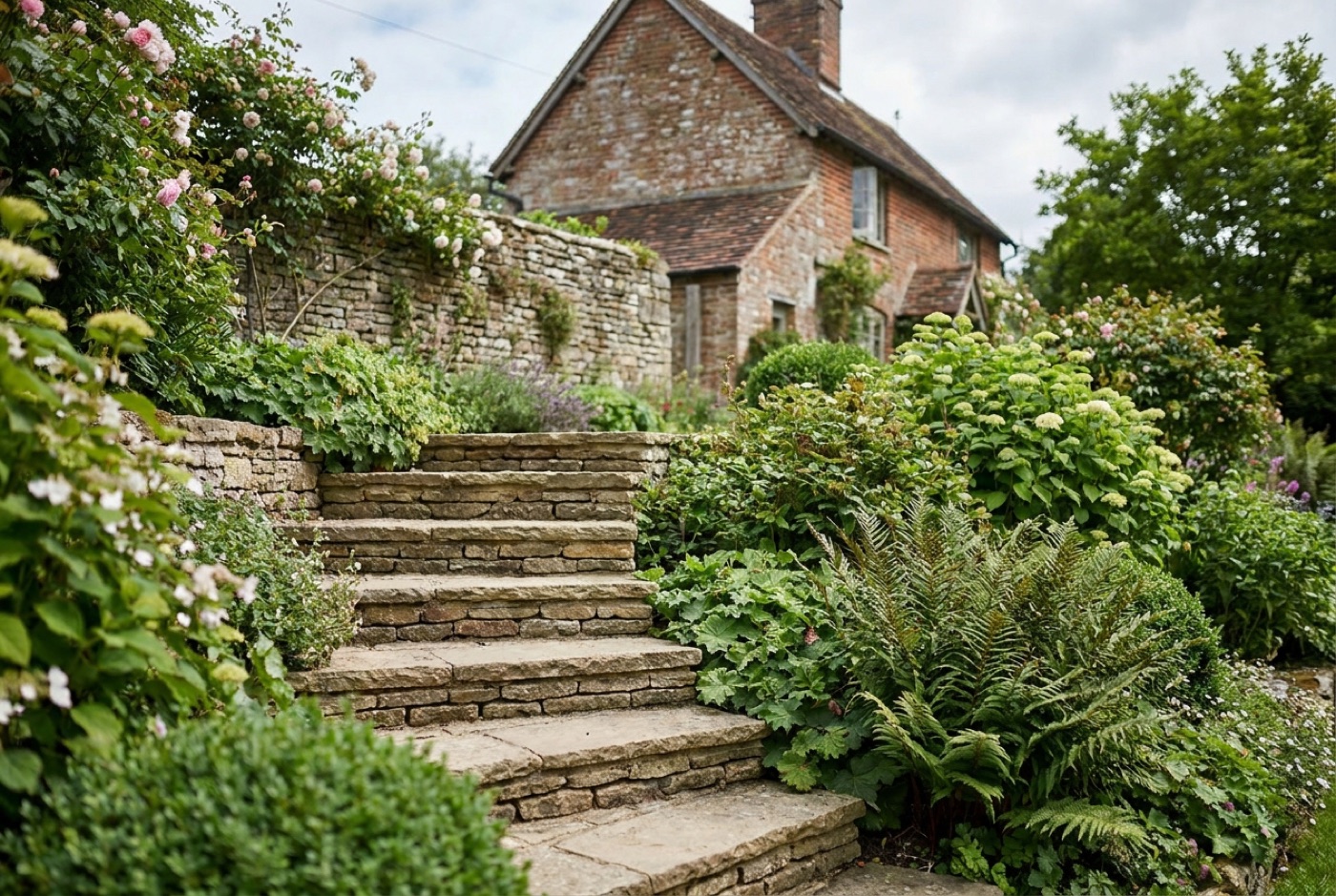
Steps are the one part of a garden you touch with your feet every single day, so the stone you choose has to do more than look good. It has to grip when it’s wet, shrug off frost winter after winter, sit comfortably against the age and style of your house, and land somewhere sensible on budget. Get it right and a flight of steps quietly earns its keep for decades. Get it wrong and you’re left with treads that go green and slick every autumn, or a stone that looks jarring against a period property.
Choosing the best stone for garden steps really comes down to four things — grip, frost resistance, looks and budget — and this guide is the map through all of them. We run through the seven stones people actually build garden steps from in the UK — what each one looks like, how well it grips, how tough it is, and roughly what it costs — then give you clear recommendations by scenario so you can decide with confidence. Once you’ve shortlisted a material, we point you to the deep-dive guides for each stone so you can drill into detail before you buy.
How to choose the right stone
Before the individual stones, it helps to know the four things that actually matter. Everything below comes back to these.
1. Slip resistance (finish matters as much as the stone). The single biggest safety factor on outdoor steps is surface texture. A riven (naturally split) or flamed (heat-textured) surface grips well underfoot even when wet. A sawn or honed finish looks smart and contemporary but is far more slippery in the rain — fine for a sheltered front step, risky on a shaded garden flight. Whatever stone you land on, the finish can make or break how safe it feels. For a deeper look at treads and grip, see our guide to the best non-slip stone step treads.
2. Durability, porosity and frost. Outdoor steps take standing water, and in a British winter that water freezes. Porous stones (most sandstones and limestones) soak up moisture, and repeated freeze–thaw cycles can spall or crack them over time — which is exactly why porous stone should be sealed. Dense stones like granite, slate and porcelain absorb almost nothing and are far more frost-proof straight out of the pallet. If you want the science on which sealers do what, our best stone sealers for steps guide covers it.
3. Cost. Budgets stretch a long way here. Precast concrete and Indian sandstone sit at the affordable end; York stone and granite at the premium end; porcelain and Portland somewhere in between. Remember the stone itself is often only half the bill — laying a flight of steps well is skilled work, so factor installation in too.
4. Style and period fit. A crisp porcelain tread looks superb against a modern extension and completely out of place against a Victorian villa. Warm riven York stone does the opposite. Matching the stone to the age and character of the house (and to any paving already down) is what separates steps that look designed from steps that look bought.
One thing worth flagging before you fall in love with a stone: the material only works if the flight itself is built to comfortable, consistent proportions. A gorgeous tread is wasted on a step that’s too steep or an uneven rise that trips people up. It’s worth settling the geometry — the rise (height) and going (depth) of each step — alongside the stone, because thickness and tread size feed directly into it. Our guide to garden step dimensions, rise and going sets out the comfortable numbers so you can spec both together.
Stone types at a glance
Here’s how the seven common choices compare. Cost bands are rough and indicative — finish, thickness, reclaimed vs new and your region all move the number.
| Stone | Look | Grip | Durability | Relative cost |
|---|---|---|---|---|
| York (Yorkshire) stone | Warm buff-grey, riven, traditional | Very good (riven) | High (seal it) | Premium |
| Indian sandstone | Warm multi-tones, riven | Good (riven) | Medium–high (seal it) | Budget |
| Portland limestone | Pale, smooth, formal | Fair (smooth) | Medium (softer, stains) | Premium |
| Granite | Speckled, cool, contemporary | Excellent (flamed) | Very high | Top-end |
| Slate | Dark, layered, characterful | Good (riven) | High | Mid–premium |
| Porcelain | Any look, ultra-consistent | Good (textured R11) | Very high | Mid–premium |
| Precast concrete | Uniform, can mimic stone | Varies by finish | Medium–high | Budget |
York (Yorkshire) stone
The British classic. York stone is a hard-wearing sandstone in warm buff-to-grey tones with a naturally riven surface that grips beautifully and weathers into something genuinely lovely. Reclaimed York carries real character — worn edges, subtle colour variation, the patina of a hundred years — which is why it’s the default for period gardens.
Character. True Yorkshire stone is quarried in the Pennines and ranges from soft honey-buff through to a cooler grey, often with faint bands of iron staining that read as warmth rather than dirt. No two flags are identical, and it darkens and mellows with age instead of looking tired. Reclaimed stock — pulled from old mill floors, pavements and yards — is the most sought-after because it arrives pre-weathered, but new riven York is quarried too and behaves the same way once it’s down.
Grip and finish. The riven face (split along the stone’s natural bed) is the one you want on treads: it’s slightly undulating and textured, so it holds grip even in the wet. York can also be sawn and honed for a smoother, more formal look, but a honed York tread turns slippery in rain and is best kept to sheltered entrances. On an exposed garden flight, always specify the riven face up.
Maintenance. Being a sandstone, York is porous, so seal it after laying and re-treat every few years. Left unsealed it drinks water, which feeds algae in shade and risks frost spalling in a hard winter. A yearly sweep and the occasional gentle wash keeps it looking its best — never reach for a strong acid or a pressure washer on full blast, both of which chew into the surface.
- Pros: timeless traditional look, excellent natural grip, ages superbly, reclaimed stock has character no new stone can fake.
- Cons: porous (needs sealing), heavy, and good reclaimed stone is expensive and increasingly hard to source.
- Best for: heritage and period gardens, traditional flights, anyone who wants the definitive English garden-step look.
- Relative cost: Premium — especially reclaimed.
- Sealing & grip: riven finish grips well; seal it to fend off water, frost and algae. See our stone sealer guide.
For the full picture — grades, reclaimed vs new, laying and upkeep — read our complete York stone steps and paving guide.
Indian sandstone
The budget-friendly workhorse of British gardens — and for good reason. Indian sandstone comes in a wide range of warm multi-tone colours (Raj green, autumn brown, mint, grey) with a riven finish that grips well, all at a fraction of York stone’s price. It’s the most popular paving stone in the country, so matching step treads to an existing patio is easy.
Character. Because it’s quarried in bulk and shipped in huge volumes, Indian sandstone offers more colour and blend choices than any other natural option. “Raj green” gives you the earthy multi-tone most people picture; “mint” and “kandla grey” read cooler and more contemporary; “modak” and “autumn brown” are warmer. It’s a convincing stand-in for York at a fraction of the outlay, which is why so many UK patios and flights are built from it.
Grip and finish. Most Indian sandstone is sold hand-riven, giving a textured, grippy tread that copes well in the wet. A newer breed of sawn-and-honed “smooth” sandstone looks sleeker but, like any smooth stone, gets slick when it rains — keep it off exposed steps or add anti-slip treatment. Watch tumbled edges too: they look charming but can round a nosing you’d rather keep crisp.
Maintenance. Quality is the thing to watch — cheaper batches vary in thickness and hardness and can include softer, more absorbent flags. Seal early to lock in colour and block staining, and be ready for efflorescence (a white salt bloom) in the first year, which is normal for new sandstone and brushes off as it weathers. Sealed and swept, a good sandstone flight lasts decades.
- Pros: affordable, huge choice of colours, riven finish grips well, widely available.
- Cons: quality varies a lot between suppliers; it’s porous and can stain or develop efflorescence if left unsealed; colours can fade a little over years.
- Best for: cost-conscious projects, coordinating with an existing sandstone patio, larger flights where budget matters.
- Relative cost: Budget — the value pick.
- Sealing & grip: seal it early to lock in colour and block staining. We have a dedicated guide to the best sealer for Indian sandstone steps.
Want the full detail on grades, colours, sealing and how to spot a poor batch? Our complete Indian sandstone guide covers it end to end.
Portland limestone
The formal, pale option. Portland stone is the bright limestone behind St Paul’s Cathedral and half of classical London. It cuts to crisp, dressed lines, so it’s the natural choice for a smart, symmetrical front-door approach rather than a rambling garden flight.
Character. Portland is a fine, creamy-white limestone that reads as elegant and architectural rather than rustic. It takes a beautifully clean dressed edge, which is why it suits formal, geometric steps and classical façades. Over time it weathers to a soft grey and can gather a little lichen, part of its charm on old buildings but something to keep on top of on a garden flight.
Grip and finish. Dressed and honed Portland is smooth — handsome, but slippery when wet, which is the main reason it belongs on sheltered, lower-traffic steps rather than a shaded garden descent. If you love the look but need the grip, ask for a shot-blasted or textured finish on the treads, or fit discreet anti-slip inserts.
Maintenance. As a limestone it’s softer and more porous than sandstone or granite, so it stains and wears more readily and absolutely must be sealed. Keep acidic cleaners well away — limestone is calcium carbonate and acid etches it — and stick to a pH-neutral wash. Treated kindly it looks superb; neglected, it picks up watermarks and organic growth faster than the harder stones.
- Pros: elegant pale colour, takes a clean dressed finish, unmistakably formal and classical.
- Cons: softer than York or granite, more prone to staining and wear, and a smooth finish can be slippery when wet — better suited to sheltered, lower-traffic steps.
- Best for: formal front entrances, dressed showpiece steps, classical architecture.
- Relative cost: Premium.
- Sealing & grip: definitely seal (limestone stains readily); keep the smooth finish off busy, exposed treads or specify a textured surface for grip.
Granite
The toughest natural stone you can put underfoot. Granite is igneous, dense and almost non-porous, with near-zero water absorption and outstanding frost and wear resistance. In a flamed finish it’s also grippy and safe. The look is cooler and more contemporary — speckled greys, blacks and silvers — so it suits modern settings better than period ones.
Character. Granite’s speckled crystalline surface — quartz, feldspar and mica flecked through a grey, silver, black or pinkish base — is unmistakable and reads as crisp and modern. Silver-grey is the go-to for contemporary schemes; black granite is dramatic against pale render or planting. Because it barely changes over the years, granite keeps its just-laid look far longer than sandstone, for better or worse depending on whether you want patina.
Grip and finish. The finish transforms it. Flamed granite (blasted with a high-temperature torch that pops the surface crystals) is textured and genuinely grippy underfoot, the right spec for steps. Polished granite looks stunning but is lethal outdoors in the wet — never use it on a tread. Bush-hammered and sawn finishes sit in between.
Maintenance. This is the fit-and-forget stone. Near-zero porosity means it shrugs off frost, resists staining and rarely needs sealing, though a light sealer can make cleaning easier and lift the colour. A rinse and an occasional soft-brush wash is about all it asks. The trade-offs are cost and weight — granite is the priciest and heaviest of the naturals, and its cool modern look can jar against a traditional house.
- Pros: extremely durable, frost-proof, flamed finish grips excellently, barely needs sealing, will outlast everything around it.
- Cons: the priciest option, very heavy to handle, and its contemporary look can clash with traditional houses.
- Best for: maximum longevity, high-traffic steps, modern gardens, anywhere you want fit-and-forget durability.
- Relative cost: Top-end — the premium performer.
- Sealing & grip: flamed granite grips well and needs little to no sealing, though a sealer can still ease cleaning.
Slate
Underrated for steps. Slate is a dense, low-porosity metamorphic stone in deep charcoals, blue-greys and rich mottled tones, with a naturally layered, riven texture that grips well and looks handsome — particularly against contemporary or rustic planting.
Character. Slate’s colours run deep and moody — charcoal and blue-black through to plum, rust and green-tinged mottling in some Indian and Brazilian grades. Wet, it darkens dramatically, which is part of the appeal in a garden that sees rain. It reads equally at home in a sleek modern courtyard and a rugged rustic setting, and pairs naturally with slate roofing or coping.
Grip and finish. Riven slate splits along its layers into a naturally textured, undulating face that grips well underfoot — one of the reasons it’s better on steps than its reputation suggests. Calibrated (machine-flattened) slate is more uniform and easier to lay level, while honed slate looks smart but, like any smooth stone, loses grip in the wet.
Maintenance. Slate’s low porosity makes it far more frost-resistant than sandstone and it needs less babying, but grade matters enormously: a poor, laminated slate can flake and shed layers (delamination), so buy a quality step-rated stone. A sealer isn’t essential but deepens the colour and repels water; the dark surface does show dust and lichen, so it rewards the odd wash.
- Pros: striking dark colour, good natural grip, low porosity so it’s frost- resistant, wears well.
- Cons: can be brittle at the edges and prone to flaking (delamination) if a poor grade is used, so buy quality; darker colour shows dust and lichen.
- Best for: contemporary and rustic gardens, dramatic dark steps, coordinating with slate paving or roofing.
- Relative cost: Mid to upper.
- Sealing & grip: naturally grippy; a sealer deepens the colour and helps repel water, though slate is less thirsty than sandstone.
For grades, colours, laying tips and how to avoid a flaky batch, see our complete slate steps and paving guide.
Porcelain
The modern outdoor tile that behaves like a super-stone. Vitrified porcelain is fired dense and hard, so it absorbs virtually no water, is highly frost-proof and almost never stains. It’s manufactured, so colour and size are perfectly consistent, and outdoor grades come with a textured R11 anti-slip surface. It can convincingly mimic natural stone, concrete or timber.
Character. Because it’s printed and fired rather than quarried, porcelain offers essentially any look you like — stone-effect, concrete-effect, timber-plank — with dead-flat consistency across every tile. That uniformity is its selling point in a contemporary garden and its weakness in a period one, where the lack of natural variation can look a little too perfect. Outdoor “20mm” paving grades are the ones built for steps and load; thinner internal tiles are not.
- Pros: extremely low maintenance, frost-proof, stain-proof, never needs sealing, R11 grades grip well, huge range of looks with total consistency.
- Cons: the manufactured look and dead-flat consistency won’t suit a heritage setting; laying it well (especially the step nosings) demands skill; cheaper tiles can chip at exposed edges.
- Best for: modern and minimalist gardens, low-maintenance households, anyone who wants a fit-and-forget surface.
- Relative cost: Mid-range, and cheap to own over time.
- Sealing & grip: no sealing needed; specify an R11 (or higher) anti-slip grade for steps.
Precast concrete
The practical, affordable all-rounder. Precast concrete steps and slabs are cast in moulds to a uniform size and finish, and modern products can convincingly imitate riven stone at a much lower price. Consistency makes them easy to lay to a level, neat flight.
Character. Quality has come a long way — the better “cast stone” ranges take a mould off real riven stone and add through-body colour, so they read surprisingly well from a step or two back. Up close, and especially as they age, they rarely fool anyone the way real stone does, and cheaper units can look flat or fade unevenly. In-situ poured concrete is a related option for a modern, monolithic look — different beast, same durability logic.
- Pros: the most affordable and predictable option, uniform sizing, widely available, decent stone-effect finishes now exist.
- Cons: it’s not the real thing and rarely fools up close; cheaper units can look flat or fade; a smooth cast finish can be slippery, so choose a textured one.
- Best for: tight budgets, large or utilitarian flights, projects where uniformity and cost beat character.
- Relative cost: Budget — the value end.
- Sealing & grip: a sealer helps resist staining and slows algae; pick a textured surface for grip rather than a smooth cast one.
Porcelain and concrete alternatives to natural stone
Not everyone wants — or needs — natural stone. The two big man-made alternatives, porcelain and concrete, have improved enormously and each earns its place for the right project. Both trade a little authenticity for real practical wins: consistency, predictability and, with porcelain, near-zero maintenance.
Porcelain is the low-maintenance champion. Fired dense and vitrified, it absorbs almost no water, never needs sealing, resists stains and frost, and comes in an R11 anti-slip grade made for steps. If you want a surface you can lay and essentially forget, in a clean modern style, porcelain is unbeatable. The catch is that it looks manufactured (wrong for heritage settings) and its edges and step nosings demand a skilled installer — porcelain is unforgiving to lay badly.
Concrete splits into two families. Precast cast stone units mimic riven stone in colour and texture at the lowest price of anything here, and modern ranges are genuinely convincing from a short distance — ideal for larger or utilitarian flights on a budget. In-situ poured concrete goes the other way: a monolithic, contemporary, seamless look you can’t get from any slab, cast on site to whatever shape you like. Our concrete garden steps guide covers both routes, cost and how they’re built.
If you’re genuinely torn between the real thing and the modern substitutes, we’ve put them head-to-head — grip, durability, looks, upkeep and cost — in natural stone vs porcelain vs concrete for steps and patios. It’s the best next read if the natural-versus-manufactured question is what’s holding up your decision.
What drives the cost of stone steps
The stone you pick is only one lever on the final bill, and often not the biggest. When you’re comparing options, keep these cost drivers in mind — they explain why two flights in the “same” stone can differ wildly in price.
| Cost driver | Why it moves the price |
|---|---|
| Material choice | Concrete and Indian sandstone sit at the value end; porcelain and slate in the middle; York and granite at the top. |
| New vs reclaimed | Reclaimed York and other salvaged stone command a premium for their character and scarcity. |
| Finish | Riven and flamed finishes (the grippy ones) can cost more than sawn; bespoke dressed edges add labour. |
| Thickness and size | Thicker, larger and full-tread-depth units cost more and are heavier to handle and lay. |
| Installation | Building a safe, level flight is skilled work — labour often matches or exceeds the material cost. |
| Site access and prep | Awkward access, deep foundations, drainage and retaining all add time and money. |
| Sealing and upkeep | Porous stone needs sealing now and periodically later; porcelain and granite need almost none — a long-run cost, not just an upfront one. |
The two takeaways: don’t budget for the stone alone — installation is frequently half the total or more — and weigh the whole-life cost, not just the sticker. A cheaper porous stone that needs sealing every few years can, over a decade, cost more to own than a dearer stone that looks after itself. Getting the flight built correctly the first time is money well spent — our guide to laying stone garden steps shows what “done properly” involves.
Which should you choose?
Short version, by scenario:
- Heritage or period garden → reclaimed York stone, sealed. Nothing else looks as at home against old brick and stone.
- On a budget → Indian sandstone (riven), sealed early. The best looks-per-pound in British gardens.
- Maximum durability / high traffic → flamed granite. Fit-and-forget for decades.
- Modern or contemporary garden → porcelain (R11) or granite for clean, consistent lines.
- Lowest maintenance → porcelain — no sealing, no staining, no fuss.
- Formal front-door approach → dressed Portland limestone for a bright, classical entrance.
- Something different → slate for dark, characterful drama.
Two rules apply whatever you pick. First, the finish matters as much as the stone — a riven or flamed surface grips far better than a sawn or honed one, so never buy smooth treads for an exposed flight. Second, every porous stone should be sealed — York, sandstone, Portland and concrete all benefit, and it’s the cheapest insurance you can buy against frost and slippery green algae.
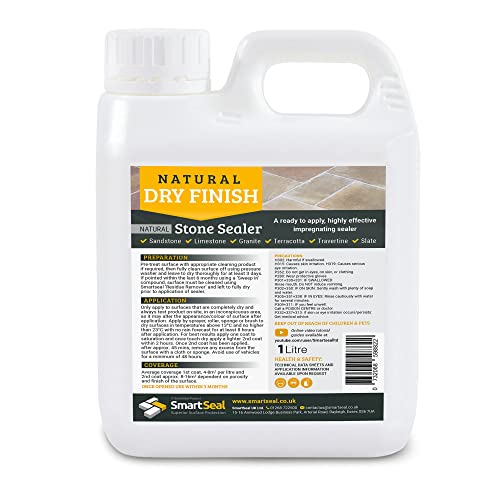
Smartseal Natural Stone Sealer — Natural Finish
- Soaks in — keeps a natural, matt finish
- Breathable, won't trap moisture in the stone
- Doesn't reduce underfoot grip on treads
- Won't add a glossy 'wet look'
- Needs a dry spell to apply properly
Whatever porous stone you choose — York, Indian sandstone, Portland or concrete — this impregnating sealer is the sensible default. It protects from within against water, frost and staining without changing the look or making treads slippery, which is exactly what you want on a surface people walk on. For the full breakdown of sealer types and more picks, see our best stone sealers for steps guide.
Once you’ve settled on a stone, our guide to laying stone garden steps walks through building a safe, level flight, and if you’re still gathering looks, garden steps ideas is full of layouts worth stealing. For a closer head-to-head on the three heavyweight naturals, see York vs Portland vs granite for steps.
FAQ
What is the best stone for garden steps?
There’s no single winner — it depends on what you’re optimising for. For a traditional look, reclaimed York stone is hard to beat. For value, Indian sandstone gives you 90% of the look for a fraction of the price. For sheer toughness, flamed granite wins, and for the lowest maintenance, porcelain. If we had to name one all-rounder for a typical UK garden, sealed riven Indian sandstone or York stone hits the best balance of looks, grip and cost.
What is the best stone for outdoor steps?
For outdoor steps specifically, prioritise grip and frost resistance over looks. That points to riven or flamed finishes and denser, less porous stones. Flamed granite, R11 porcelain and riven slate all cope brilliantly with wet British weather with minimal upkeep. Natural sandstones (York and Indian) also work well outdoors provided you choose a riven finish and seal them. Avoid smooth, honed surfaces on any exposed outdoor flight — they turn slick in the rain.
How much do stone garden steps cost?
It varies widely, so treat these as rough, indicative bands rather than quotes. Materials run from the affordable end — precast concrete and Indian sandstone — up through porcelain and slate in the middle, to York stone and granite at the premium end. Crucially, the stone is often only half the total: laying a flight of steps safely and to level is skilled labour, so installation frequently costs as much as the material, sometimes more. Reclaimed stone, unusual sizes and difficult access all push the figure up.
What is the most non-slip stone for garden steps?
Flamed granite and R11-rated porcelain offer the most reliable wet grip, followed closely by riven natural stone (York, Indian sandstone and slate). The finish is what matters most: a textured, riven or flamed surface grips far better than a smooth sawn or honed one, whatever the stone. On any existing smooth steps you can improve grip with anti-slip inserts or treatments — our guide to the best non-slip stone step treads covers the options.
Is natural stone or porcelain better for garden steps?
Both are excellent — the choice is about priorities. Natural stone wins on character, warmth and heritage fit, and it can be repaired or re-dressed if it’s ever damaged. Porcelain wins on maintenance: it never needs sealing, doesn’t stain, and is highly frost-proof, but it looks manufactured and demands a skilled installer, especially at the step nosings. For a period property choose stone; for a modern, low-fuss garden porcelain is hard to beat. Our natural stone vs porcelain vs concrete comparison weighs it all up in detail.
What is the most durable stone for garden steps?
Granite is the most durable natural stone for steps — dense, near non-porous and virtually frost-proof, it outlasts everything around it with minimal upkeep. Slate and porcelain are close behind on frost and wear resistance. The porous sandstones (York and Indian) are perfectly durable in the British climate too, provided they’re sealed and laid on a sound base; the sealing is what keeps frost from finding its way in. In short, if fit-and-forget longevity is your top priority, flamed granite is the safe answer.
Do stone garden steps need to be sealed?
Porous stones — York, Indian sandstone, Portland limestone and concrete — should be sealed to block water, resist staining and slow algae, and that seal needs refreshing every few years. Dense stones like granite and slate, and porcelain, need little or no sealing because they barely absorb water. An impregnating (breathable) sealer is the sensible default for treads because it protects from within without making the surface slippery — see our best stone sealers for steps guide for the full rundown.
How thick should stone be for garden steps?
For tread slabs on a properly prepared, mortar-bedded base, most natural stone paving is 20–30mm thick, while purpose-made step treads and copings are often thicker (40–60mm and up) for strength at the nosing. Outdoor porcelain for steps should be the 20mm paving grade, not thin internal tile. Thickness feeds directly into the step geometry, so settle it alongside the rise and going — our garden step dimensions guide explains how the numbers fit together.