York Stone vs Portland Stone vs Granite for Steps
Which natural stone is best for steps? We compare York stone, Portland stone and granite on grip, durability, looks and cost.
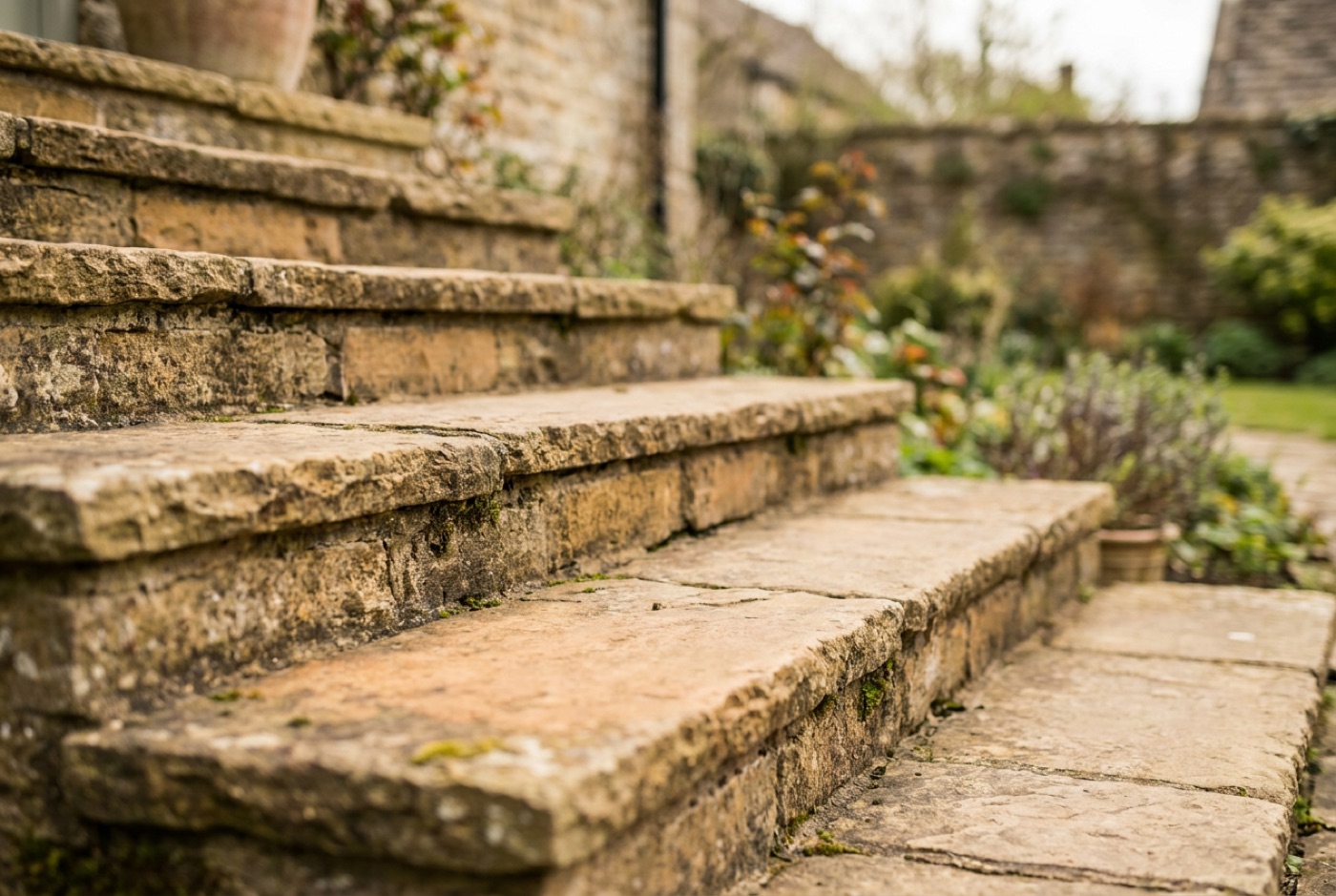
Three stones dominate British steps — York stone, Portland stone and granite — and each earns its place for different reasons. This comparison of York stone vs Portland stone vs granite for steps looks at grip, weathering, maintenance, looks and cost, so you can pick the right one for your project and budget. All three are natural stone, all three will comfortably outlive concrete, and all three come down to the same three questions: how much traffic will the steps take, how much do you want to maintain them, and does the look suit the building?
At a glance
| Stone | Best for | Grip (best finish) | Durability | Relative cost |
|---|---|---|---|---|
| York stone | Heritage & garden steps | Very good (riven) | High (seal it) | Premium |
| Portland stone | Formal front entrances | Fair (smooth) | Medium (softer, stains) | Premium |
| Granite | Maximum durability | Excellent (flamed) | Very high | Top-end |
York stone — the British classic
York stone is a hard-wearing Carboniferous sandstone from the Pennines, with a warm buff-to-grey colour and a naturally riven surface that grips underfoot. It’s the traditional choice for garden steps and period properties, weathers beautifully, and reclaimed York stone carries genuine character. The trade-offs: it’s porous (seal it), heavy, and good reclaimed stock isn’t cheap. For the full story on grades, riven vs sawn and reclaimed sourcing, see our York stone steps and paving guide.
Grip and finish
The natural riven (split) face is York stone’s biggest advantage on steps — the surface is subtly textured and stays reasonably grippy even when wet, which is exactly what you want on an outdoor flight. A sawn or honed York stone looks smarter and more uniform, but it’s noticeably slicker underfoot, so if you go sawn on a tread, consider a shot-blasted or flamed finish, or add a slip- resistant edge. Fine-rubbed nosings on the step edge are the one part worth dressing smooth for comfort.
Weathering
York stone ages gracefully rather than degrading. Over the years it develops a soft patina, holds a little moss in shaded joints, and generally looks better at 20 years than at two — which is why reclaimed stock is so prized. It’s frost- durable when laid and drained properly, though standing water and unsealed stone can lead to surface pitting or spalling over many hard winters.
Maintenance
Expect a light-touch but ongoing routine: an annual clean, keeping joints clear, and re-sealing every few years. Because it’s porous it will drink up oil, wine and leaf tannins if left bare, so an impregnating sealer is strongly advised — see best stone sealers for steps. Green growth in shaded, damp positions is normal; our guide on how to remove moss and algae from steps covers doing it without harming the stone.
Best for: heritage settings, garden flights, cottage and period gardens, and anyone wanting a traditional riven finish that improves with age.
Portland stone — the formal white limestone
Portland stone is the pale, creamy-white limestone behind St Paul’s Cathedral and countless London facades. It cuts to crisp, clean lines, which makes it the go-to for formal front-door steps and porticos where you want a smooth, dressed finish. Being a limestone it’s softer than York or granite and more prone to staining, so it suits lower-traffic, showpiece steps rather than a busy garden route.
Grip and finish
Portland is usually specified with a fine sawn or fine-rubbed face because that crisp, uniform look is the whole point of using it. That does mean grip is only fair when the surface is smooth and wet — the trade-off you accept for the formal appearance. On steps you can improve this with a lightly tooled, dragged or shot-blasted tread finish, or by keeping the going generous and the rise comfortable. It’s a stone that rewards good detailing over brute texture.
Weathering
Portland self-cleans on exposed vertical faces (rain washes it), which is why London’s Portland facades stay bright — but horizontal step treads don’t get that benefit and can hold dirt and organic staining in sheltered, damp spots. As a limestone it’s more sensitive to acidic cleaners and to de-icing salts than sandstone or granite, so winter salt on Portland steps is best avoided. Well- detailed and drained, it lasts generations; neglected and waterlogged, it softens and stains faster than the other two.
Maintenance
Plan on a gentle, limestone-safe regime: soft brushing, plain water or a pH- neutral stone cleaner, and no acidic patio products, which will etch it. Sealing helps resist oil and organic staining and is well worth doing on a showpiece entrance. Because it’s the softest of the three, keep pointing sound and water moving — see how to clean stone steps and patios for method, and how to repoint stone steps and walls if the mortar joints have started to fail.
Best for: formal front entrances, dressed and cut steps, porticos, and a bright, classical white look on lower-traffic showpiece flights.
Granite — the workhorse
Granite is an igneous stone and by far the toughest of the three — near-zero water absorption, extreme frost and wear resistance, and available in flamed (textured, grippy) finishes ideal for steps. It’s the most durable option and will outlast everything around it. The downsides are cost and weight, and a more contemporary look that won’t suit every period property. Colours run from silver-grey through to near-black and speckled pinks, letting you match it to modern or traditional schemes.
Grip and finish
Granite gives you the widest grip range of the three. A flamed (thermal) finish is textured and highly slip-resistant even when soaked — the default specification for outdoor granite steps and the reason it’s used in busy public settings. A polished granite tread, by contrast, becomes dangerously slick in the wet and should never go on an external step. Between the two, honed and shot- blasted finishes offer a smart look with usable grip. For treads, flamed is almost always the right call.
Weathering
This is granite’s strongest suit: with water absorption close to zero it barely takes on moisture, so frost has almost nothing to work on and the stone shrugs off British winters. Colour and finish stay stable for decades, it resists de-icing salt far better than limestone, and it doesn’t spall or soften. The one thing to watch is that a flamed surface, being open-textured, can hold a little algae in permanently shaded, damp positions — cosmetic, and easily cleaned.
Maintenance
Effectively the lowest-maintenance stone here. Sealing is optional rather than essential because it’s so dense, though a sealer can still make cleaning easier and resist oil marks on a doorstep. Otherwise it’s an occasional wash and keeping joints clear. If green film builds up on a flamed finish in shade, treat it as you would any other stone with how to remove moss and algae from steps.
Best for: high-traffic and commercial steps, exposed and coastal sites, contemporary designs, and buyers prioritising longevity and low upkeep above all.
How they compare on the things that matter
The headline table sets out the shape of it; here’s a little more nuance on the three factors people actually ask about.
Grip when wet
For an outdoor step, wet grip is the single most important property — most slips happen on smooth, damp treads. Flamed granite leads, natural riven York stone is close behind and very good, and smooth Portland is the weakest of the three unless you specify a tooled or blasted tread. Whatever the stone, the finish decides the grip: a riven or flamed face grips far better than a sawn-and-honed one. If grip is your priority, read our guide to the best non-slip stone step treads.
Durability and weathering
Granite is effectively permanent and needs the least looking-after. York stone is highly durable and, sealed and drained, will happily do a century. Portland is the softest and most staining-prone, so it’s best kept to lower-traffic showpiece positions and away from de-icing salt. All three beat concrete for lifespan and looks.
Cost and character
Portland and York both sit in the premium bracket, granite at the top end, especially once you factor in the weight and the skilled labour to lay heavy stone steps well. What you’re buying at that price is character and longevity: York for warm, aged, traditional charm; Portland for crisp classical formality; granite for uncompromising toughness and a cleaner, more modern line.
Which should you choose?
- Traditional garden steps → York stone, riven and sealed.
- Formal, dressed front steps → Portland stone, well detailed and drained.
- Toughest, longest-lasting or high-traffic steps → flamed granite.
- Coastal, exposed or commercial sites → granite, for its near-zero water absorption and salt resistance.
- Period cottage or country garden → reclaimed York stone for instant patina.
Whichever you pick, the finish matters as much as the stone, and every porous stone (York and Portland especially) should be sealed — see the best stone sealers for steps. If you’re still weighing up the wider field, our best stone for garden steps guide sets these three against sandstone, slate, limestone and porcelain. And if a warm riven look appeals but budget is tight, Indian sandstone is a popular value alternative to York — compare them in our Indian sandstone guide. For a darker, more contemporary natural finish, it’s also worth reading our slate steps and paving guide.
FAQ
Which is the most slip-resistant stone for steps?
Flamed granite offers the best wet grip, closely followed by naturally riven York stone. Smooth Portland limestone is the least grippy of the three unless you specify a tooled, dragged or shot-blasted tread. Grip depends as much on the finish as the stone type, so never use a polished or sawn-smooth surface on an external tread.
Is granite better than York stone for steps?
For pure durability and low maintenance, yes — granite has near-zero water absorption and shrugs off frost, salt and heavy traffic. But “better” depends on the setting: York stone suits period and garden schemes far more sympathetically and develops a beautiful patina, whereas granite reads as more modern. Choose granite for toughness, York for traditional character.
Does Portland stone need sealing on steps?
Yes, it’s well worth sealing Portland steps. As a soft limestone it readily absorbs oil, wine and organic staining, and a good impregnating sealer helps resist marks while still letting the stone breathe. Avoid acidic patio cleaners entirely, as they will etch the surface — use only pH-neutral, limestone-safe products.
Which stone lasts the longest for outdoor steps?
Granite is the longest-lasting by a clear margin, thanks to its extreme hardness and near-zero porosity — it can last well over a century with almost no attention. Well-laid, sealed York stone also lasts generations. Portland stone lasts a very long time too, but is the most sensitive to neglect, salt and standing water of the three.
Is York stone or Indian sandstone better for steps?
York stone is the higher-grade, more characterful and more durable of the two, and it’s the traditional heritage choice. Indian sandstone is a popular budget-friendly alternative that gives a similar riven, warm look for considerably less. If period authenticity or reclaimed character matters, choose York; if value and a similar appearance matter more, Indian sandstone is a sensible pick — see our Indian sandstone guide.
Can you mix these stones in one project?
You can, and it’s often done well — for example granite for a hard-wearing bottom step and threshold, with York stone for the garden flight above, or a granite riser band under Portland treads. The key is to keep the palette deliberate and match the finishes so grip is consistent underfoot across the whole flight.